Saturday, December 6, 2014

Individual Project Finale

Reflection on Zero-Waste Brewing 

My individual project was a success in many ways, the most notable being that it made me more aware of the importance of small actions and forced me to re-think how I live. Brewing beer popped into my head after a month of bottles piled up in my new apartment and made me aware of how much waste I am responsible for everyday. Even if I did plan to recycle the bottles, research found that most beer bottling companies only utilize 12.5% recycled glass1. Being short on cash but high in energy, I decided to brew my own!

Successes:
  • 3 awesome batches of homebrewed beer!
  • Went from recycling or throwing out ~45 bottles per month in my household to zero, beginning in September.
  • Approximately 135 bottles saved
  • Re-purposed about 75% of water required to brew  (~ 18 gallons)
  • Incorporated spent grains (usually a waste product) into cookies, granola, and baked goods
  • Shared bottling equipment
                                            First batch complete- Belgian Witbier in re-used bottles

Quantitative Aspects Reflection:

The project ‘s biggest quantitative success was the approximately 135 bottles saved. This not only saves glass and the energy involved in making new bottles, but also heavy transportation costs, labeling and packaging costs, and costs associated with making the purchase itself (more gas, miles etc). It also means that my roommate and I will save ~540 bottles each year that I brew, and after tasting how delicious home brew can be, I am planning on continuing for a long time, meaning even more savings in these categories in the future.

 
                 New Belgium Brewing Co. 37.6% of calculated carbon footprint due to glass bottling 

Half of the brewing equipment (all the bottling gear) was borrowed from a friend who also brews- saving me around $60 and saving a considerable amount of excess plastic. Since each of us only need the equipment 1 day a month it makes more sense to work out a sharing program between local brewers rather than each person having a full set of equipment.

Because I began to require more bottles as I brewed consecutive batches, friends saved bottles for me and started trading me homemade food and wine for beer! Sharing and trading are at the heart of any strong community and brewing via this project has helped solidify more personal bonds and piqued considerable interest among acquaintances.

Re-used approximately 18 gallons of waste water used to clean brewing equipment to wash my dishes and clean my bathtub- now a monthly routine.

After the first batch of beer, I began to incorporate spent grains into cookies, granola, and waffles, producing almost zero waste from the process. I even use the malt containers as cookie jars!

Qualitative Aspect Reflection:

This success of this project was not only focused on quantitative components, but also on the many additional lessons learned throughout the project that corresponded with topics discussed in class. The combination of learning about the larger importance of water and energy conservation, cultivating greener, food secure communities, and waste reduction and recycling while focusing on a zero-waste project helped me to understand these concepts on both a macro and micro level. While in class we tended to focus on the wider effects of policy on communities, regions, and the world, my individual project was also teaching me how to be a conscious citizen of the earth without any policy implementation.   
Forcing myself to plan ahead to brew as sustainably as possible seeped into other aspects of my life and made me acutely aware of wasteful water use behavior and food waste in other aspects of my life. For instance, I noticed that after successfully incorporating wet grains into baked goods, almost all the ‘borderline’ food in my fridge could also be used in other forms instead of tossed into the garbage.  I also noticed that by trying to find ways to re-purpose water, that I began thinking of saving water in other aspects of my daily routine. Completing this project with the goal of zero-waste made me think more about the brewing process overall and also drew my attention to how much waste I produce that I never acknowledged, and ideas to reduce these numbers.

 A delicious way to incorporate a byproduct of the brewing process into brewing routine!
Problems

The main problem that I’ve found with trying to accomplish zero-waste brewing is the energy lost through heat during the boiling process.  I’ve found that during the winter an easy solution to re-using the heat energy given off during brewing can be used to heat my apartment temporarily.  Between the stovetop heat from extended boils and the heat from baking with the spent grains, my small apartment heats up pretty nicely for about 4 hours. Not a lot of savings but it’s a little more sustainable. Also, for my next batch I am planning to use the cold winter weather to my advantage and brew a lager. Lagers require at least 6 weeks of refrigeration (expensive and energy intensive)…or the temperature of a poor students’ apartment in an Indiana winter.

Future Impact/Statistics:
Statistics show that the average college student drinks 7.44 alcoholic beverages per week2. Even if we attribute only half of that to beer (bottled or canned) that accounts for 15,475,200 beer containers/year on the IU Bloomington campus alone. If everyone brewed their own beer, the saving in glass, aluminum, energy, transportation, packaging, trash pickup etc, the saving to the environment and society would be immense! I don’t think that a huge number of college students would have the time or interest that home brewing takes, but it is fairly easy, requires very little equipment and depending on what type of ingredients you use, can be significantly less expensive than purchasing beer from the store- and that is not including the externalities mentioned above.

This project has forced me to analyze every decision in a fairly complex process and use creativity to find the most sustainable solutions to an array of different behaviors. 

2 Center for Alcohol and Other Drug Studies-http://www.ncbi.nlm.nih.gov/pmc/articles/PMC3394678/
NCES (2014). U.S. Department of Education  "Fast Facts Enrollment"

Monday, December 1, 2014

Final Course Reflection


The first day of class you said something that stuck in my head, and I think it will continue to stick with me for a long time. You said that experience is nothing without reflection. I’ve had a lot of experiences in my life, but that one stray comment made me wonder just how often I had really stopped to reflect upon those experiences, and if they would have been richer had I just paused. It’s nagged me all semester and while I don’t have an answer as to previous experiences, I do know that this class made me stop and think, and that’s a lesson that I think we all need to be reminded of from time to time in our lives.

Overall Impression

The format of the class was innovative and a welcome breath of fresh air in the rip tide of regular grad classes. It was especially refreshing after coming back from working in the real world for a couple of years and suddenly faced with the façade of student life where pride seems to come in the form of letter grades. The class format might not work for everyone, but I found it very useful and it encouraged me to study harder and reflect more deeply than exam based courses.  

Understanding of Sustainability

Prior to this class, sustainability was a term that I had heard thrown around a lot, but a concept that felt too big and expansive to properly define.  After taking this course, completing my individual project and working on the STAR community report for the City, I feel that while sustainability remains a very expansive term, it is something that I am constantly aware of now and actively striving toward in a vast array of thoughts and forms. My personal project of sustainable brewing forced me to look at sustainability from a variety of perspectives and levels that I never would have believed possible.

Course Projects

In planning my independent project, the most basic aspects of conserving, recycling and reusing came easily, while re-thinking sustainable approaches took a greater effort, more creativity and made the topic more interesting to me. A bigger picture began to form as each minor detail such as water re-use, glass recycling, cooking with spent grains, sharing communal equipment initiated an incremental lifestyle change. I started researching each topic separately, and while each topic was relatively minor on its own, each aspect emerged as something larger in the end. I noticed that drawing attention to how much water I could re-use in brewing changed my overall consumption of water, and my boyfriend’s consumption as well.   Relying on other people for equipment allowed me to make connections with new people who not only had lots of helpful advice, but also more equipment to share. Around the same time I began sharing my car with a friend and finally put my apartment on the couchsurfing website to reciprocate for all the couches I’ve bummed during my travels. Learning to cook with wet spent grains encouraged me to pay more attention to other food I was throwing out that could be re-purposed with a little creativity.  I began to see that sustainability is not just about changing policy, but our everyday behavior, and most importantly, our very way of thinking.

Course Content

Many of the articles that we read, especially those that focused on the economic perspective of carbon use, climate change and natural resources impacted me the most deeply. Those articles did not just focus on what individuals can do, but proposed that we think about the world differently. If we begin to see a world with a definitive limit, that GDP always adds and never subtracts, that it is bizarre to tax everything except limited resources, that scare resources are used to the detriment of the planet while a nearly inexhaustible labor market goes under-utilized to the detriment of people, the world begins to look different, and questions begin to surface. With questions inevitably come answers, and more questions. In cases like this, it is the questions themselves that can change the world. The little routine choices that we make everyday matter too, but for me, it is learning to question the root of the issues that made this topic and class so useful to me. While I’m sure many of the facts we’ve discussed in class will fade, the questions will not. I think that is the best type of education we can receive, the type that motivates us to learn more, to constantly seek to find answers, discuss frequently, until we change things in the process.

Thanks for everything, I really enjoyed this class and appreciate all your insight. Hope to stay in touch and please feel free to let me know if you need any help on local sustainability initiatives, I’m always happy to help out!

Monday, November 17, 2014

NPR Cities Project- Out of class Experience III

NPR producer and Franklyn Cater and former New York chief urban designer Alexandros Washburn visited IU Bloomington last week to discuss Urban Resilience and the NPR Cities Project.

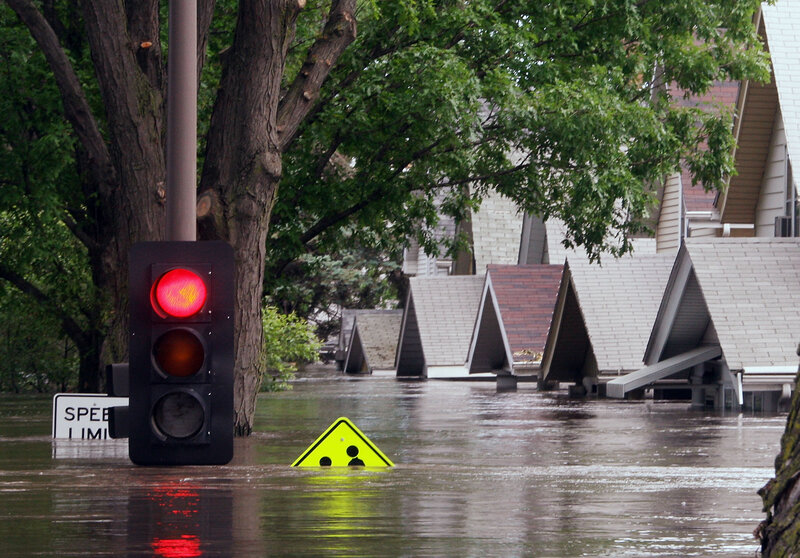
                                            A flooded street in Cedar Rapids, Iowa. In the summer of 2008, the city ordered evacuations as Cedar River rose.
                                           One reason why we need to discussion urban resilience Scott Olson/Getty Images


In order to understand and design a resilient urban community, the hosts of the evening focused on 3 central planning strategies, location, design and mobility.

1. Location: As most of us already know, its all about location, location, location, a fact reiterated by Cater and Washburn throughout the lecture.  They illustrated this point by showing communities in Staten Island, NY who lived in houses that were for all practical purposes, located in a swamp. Obviously, this creates problems when significant weather events strike, and after Hurricane Sandy hit the east coast, federal money was granted to buy out some of these homes to provide a buffer from the water. They also mentioned that there are 2 strategies to location, retreat and defend.

Retreat- depending on the building structure or area, one possible way to change 'location' is to retreat vertically, that is, keep building up! If flooding is a foreseeable danger, put all water sensitive items in an upper floor.

Defend: redesign the landscape to provide natural barriers to predicted weather events. Surrounding canals with burms, or redesigning a local flood prone area into a recreational park as  in Meadowlands, NJ. The main problems with this strategy are a vast array of political, local, and stakeholder concerns that must be addressed before any project can move forward.

2. Design: Ensure that all new buildings and existing buildings (if possible) are built in a thoughtful way that incorporates resilience and protective measures. Examples of this include, building vertically, insulators, and using tall buildings as natural shading. One specific example of this was utilizing some of these techniques to prepare for a rising heat index in Arizona based on ancient desert city designs/city planning.

3. Mobility: Ensure that transportation is multi- modal, so that if a disaster strikes, people have many options. For instance, when Hurricane Sandy shut down the subway in NY, people could still utilize ferries, bikes, and walking to commute.

This topic is very important in discussing any aspect of sustainability because it pertains to our communities ability to survive and bounce back after natural disasters. Without plans such as these, most other sustainability efforts on the front of food, water, etc are minimized instantly as disasters strike, especially if fresh water sources are not adequately prepared. While trying to minimize additional carbon output into the environment is crucial, we are at a point currently that exceeds the tipping point for what the planet can absorb and we must not only concentrate on solving the root problem, but also preparing for events already in motion because of choices already made by previous generations.

Sunday, November 16, 2014

Governing Sustainable Communities

Resilient Bayview Project


In Mark Roseland’s chapter on governing sustainable communities, he emphasizes the importance of participatory governance that includes the voices of all stakeholders and the necessity of community based efforts.  Much of the chapter focuses on providing advice to both citizens interested in becoming involved in sustainability efforts as well as to local governments that strive for just sustainability for all their residents.

Even after reading the chapter, many of subtle nuances of the various ideas were lost on me, as all of them focused on communicating community opinion to integrate change. However, after a little research I found the Resilient Bayview Project, a initiative centralized in the Bayview area of San Francisco that seems to illustrate almost all of Roseland’s sage advice and is succeeding in forming a resilient community via holistic local efforts.

Lashon Walker- a member of the Resilient Bayview Project


The Resilient Bayview Project is a community-led planning effort that aims to plan, develop and implement a Resilience Action Plan that will prepare the community for major environmental catastrophes (mainly earthquakes). This effort brings together neighborhood leaders, city agencies and all additional stakeholders from local families, immigrant communities, senior citizens, small businesses to local non-profits. The congregation of stakeholders meets monthly with the goal to find ways to protect the region’s most vulnerable citizens in case of emergencies by training residents on evacuation techniques, setting up support lines, distributing emergency kits, and providing additional information concerning emergency response. 

The project has been designed by the community and is staffed by community volunteers in order to protect the community. This seems to be a perfect example of Roseland’s prescription on how to involve residents to govern sustainable communities by using both visioning and implementation charrettes and consensus-based decision making. The Resilient Bayview Project also goes a step further in engaging in community sustainability and resilience by training at-risk youth to secure foundation’s of senior citizen housing, an effort paid for by grant money and serving to protect seniors, construct more durable housing, and provide at-risk youth with skills, income, and purpose, all at the same time. These are the types of plans that only active community members could innovate, communicate, and plan, because they involve a deep knowledge about what each region needs, and also the resources that they can access. Many sustainability initiatives also require trust, which can be built much quicker through community members and local organizations than by government agencies. Also, as we learned in community based social marketing, being a part of a change organization often ensures that you put forth more effort and are much more likely to strive to see the initiative succeed than if it was solely a governmental measure. 


 Dan Homsey speaking about the Neighborhood Empowerment Network from the government point of view

To leave with you with a final thought from the leader of the Resilent Bayview Project, “We aren’t going anywhere. We know that if we work together before a major catastrophe, we will be able to work together during a major catastrophe.”

What other communities that you know about have succeeded in community resilience projects such as this one?  Which of the other types of governance strategies that Roseland mentioned would work best for similar initiatives?

Sources:
1. Roseland, Mark. Toward Sustainable Communities. 2012.
2. How One California Community Prepares fot hte Worst. http://www.governing.com/news/headlines/gov-how-one-san-francisco-city-prepares-for-the-worst.html


Wednesday, November 5, 2014

Food Matters- Discussion on Food Issues -Out of Class Experience II

Mark Bittman is a food columnist for the NY Times and cookbook author. As part of IU's themester Eat, Drink, Think: Food from Art to Science the author journalist discussed food policy and issues in America.

TED talk with Mark Bittman from 2007- "What's wrong with what we eat?"

To begin, he stated that he believed 60-80% of supermarket food is so packed with preservatives and chemicals that it could not be defined as 'food' by dictionary terminology. He instead classified them as UFO's -'unidentified food like objects.' This made me laugh because it is so true, it has become nearly impossible to find food in the supermarket that doesn't contain unpronounceable and unheard of ingredients.

He equated this public health issue to smoking back in the 80's- many people will likely end up with diseases or die unnecessarily before laws are changed (this time in the form of diabetes and obesity rather than lung cancer).

Bittman also identified 3 changes that he believed that U.S. policy makers should undertake to solve this issue.

1. Create policy's that remove antibiotics from the food supply

2. Limit the ability of food marketers to target children- food preferences are formed infancy or early childhood so targeting children with sugary soda's, candy, cereals etc is creating problems for the future. Bittman even recommended laws preventing children from buying certain foods and drinks before 16 without an adult present. Yikes!

3. Create a national food policy- guarantee all citizens access to 'real' food, guarantee that food will not have a more negative impact on the environment than necessary. Provide comprehensive food service wages

He also left the audience with words of wisdom aimed at answering the question we all had, what can college students do to change the food system in America?

1. Divestment- speaking up and telling policy makers on campus that we do not want our food endowments coming from large food companies.

2. University food services need to be better
      - ban meat with antibiotics ( if Chipotle can do it, universities can)
      - source a significant percentage from local farms
      -compost all kitchen and food court waste

3. Make food important in your own life- be passionate and you will positively influence those around you


What do you think about his advice? Are these the  central changes that need to be made to our food policies in the US? What are some ways that other countries have dealt with similar problems?

The first thing that comes to my mind is the national soda tax that Mexico recently passed- a policy that caused a decrease of almost 10% in soda products sold, and the extra cash from the tax was earmarked to provide clean drinking water to its citizens. For more info on this project go to http://www.theguardian.com/world/2014/jan/16/mexico-soda-tax-sugar-obesity-health

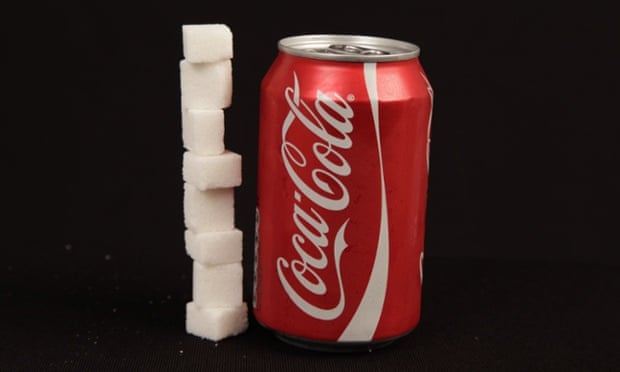
can of coca cola / coke and sugar cubes


One can of Cocoa Cola contains the equivalent of eight sugar cubes, according to its own label. Photograph: Geoff Abbott/Demotix/Corbis


Tuesday, November 4, 2014

To Brew or Not to Brew


So I've truly been enjoying brewing my own beer. However, I have quite a bit in reserve now and am going to take a pause for a while. While I'm taking a brief hiatus, I'm going to take the opportunity to reflect on 'zero-waste' my project actually is.

Home Brewing Process
Industrial Brewing Process

To begin, going zero-waste on an individual or household scale is pretty near impossible no matter what the subject is. The technology required is just too expensive and unnecessary for small scale projects such as this one. 


The largest 'waste' that home brewing accrues is one that I have not been able to find a solution to, other than a side effect of reduced heating  in the winter. Brewing beer requires about 2 hours of boiling a large amount of water, requiring a large amount of energy. In the fall and winter this produces the wonderful by-product of heat and allows me to give the apartment heater a break. Is this zero- waste? I would have to compare electricity bills over the long run and account for a lot of seasonal temperature variation and behavior to find if this saves money or energy. I doubt that is does, but at least the by-product is useful and achieves duel purposes!

 I don't know what the proper definition of zero- waste should be in regard to this project. Everything in the process can be re-used or recycled, such as spent grains and water as I've discussed in previous blogs, but is re-using water and heat still waste? Depends on the definition. For this project, I think I've done the best that I can do and accomplished what I aimed to achieve. Whether or not this constitutes zero-waste is up to you. Let me know what you think or ways I could improve my zero-waste goal!

Saturday, October 25, 2014

The First Sip of Glorious Home-Brewed Sustainable Beer

At last!

It took a long time to get here, to the first sip of my own beer. It was quite a process, more than I had anticipated but worth it!
A Witbier..soon to be followed by Octoberfest just in time for Halloweeen!

The hardest part the last few weeks has been waiting, seeing the rows of beautifully carbonated beverages and knowing that I had to just let them sit there for 2 more weeks. The first batch- the Witbier was not made as sustainably as I would have liked, but I was unprepared, trying to do something for the very first time and more worried about getting a drinkable concoction rather than the details of saving or reusing everything. It was also difficult because I was simply unfamiliar with the process and what elements of the process could be adapted to make the process more environmentally friendly. The process has made me much more environmentally conscious and I feel much more aware on a daily basis of what kind of resources I use just to wash dishes or cook dinner.

It's also incredible that there was such a huge difference between my first batch of beer and my second. The second time I was familiar with the process and was able to plan ahead accordingly, utilize resources to their fullest potential and to achieve almost all of my personal project goals. I have not purchased any beer in 2 months, have stuck to re-using the bottles I already had accumulated, I have re-purposed spent grains to make cookies and granola for the class, re-used grey water to wash my bathtub and clean water to wash dishes and water plants. I borrowed about half of my equipment from a friend who brews and we now alternate the equipment, saving us both money and limiting the amount of plastic and other resources consumed.

The experience of brewing and sharing my new found knowledge with friends and folks has been terrific and has encouraged me to continue brewing and experimenting and keeping it as sustainable as possible. As I share bottles with friends, the trade off for free beer is to return the bottle to me...plus any addition bottles they may have lying around destined for the trash.

I have loved this project and can't wait for my next batch to be ready...Octoberfest I'm ready for you!

p.s. The Witbier is awesome and I will share with anyone who wants to try, just let me know :)